


American Fork Canyon cuts through the Wasatch Mountains just east of the Salt Lake Valley, climbing from 4,800 feet at the canyon mouth to over 10,000 feet at the top of the Alpine Loop. In a single drive, you can pass ancient cave systems, shimmering reservoirs, high-mountain meadows, and some of the most dramatic fall foliage in the state. Whether you're planning a quick afternoon escape or a full-day adventure, this guide will take you through it stop by stop.
Stop 1: Timpanogos Cave National Monument
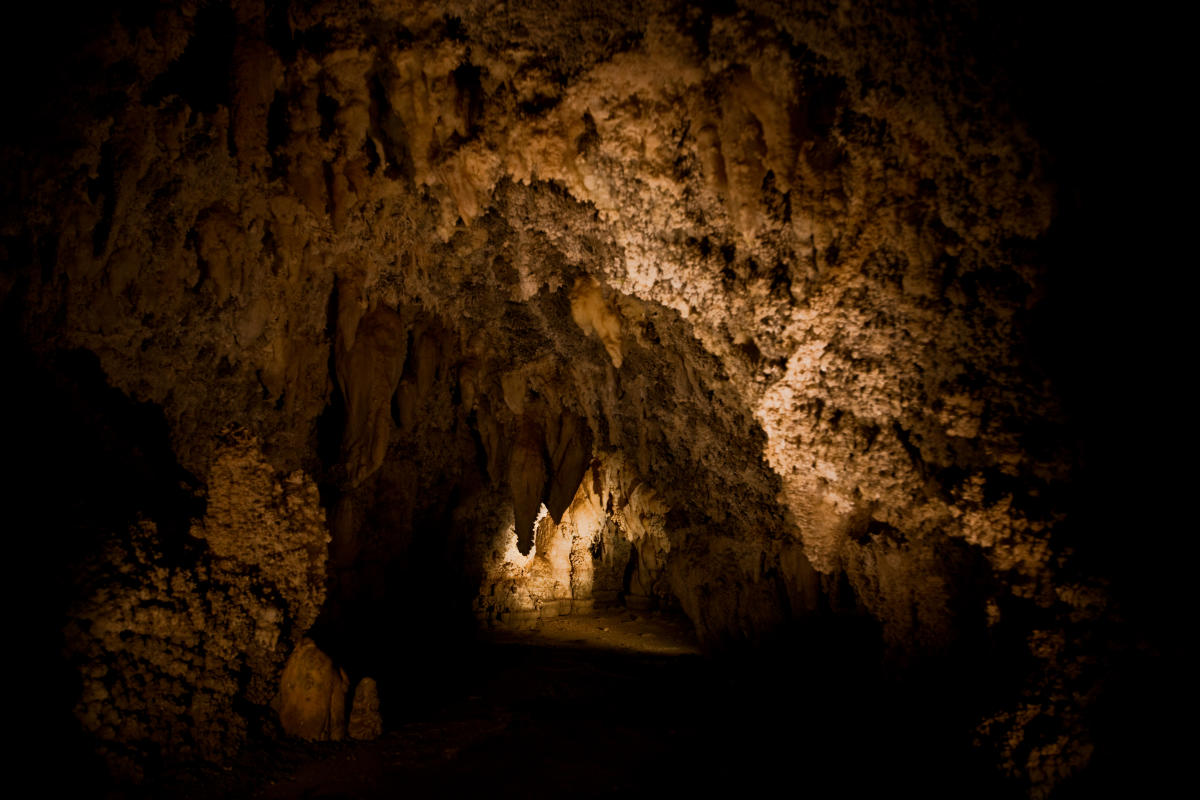
Best for: History buffs, families, early risers
No trip to American Fork Canyon is complete without a visit to Timpanogos Cave. This trio of connected caves — Hansen, Middle, and Timpanogos — sits nearly 1,000 feet above the canyon floor, reached by a 1.5-mile paved trail that gains about 1,065 feet of elevation. It's a workout, but every switchback rewards you with wider canyon views.
Inside, you'll find some of the most colorful cave formations in the National Park System: helictites twisting in impossible directions, stalactites dripping with color, and the famous "Heart of Timpanogos" — a perfectly heart-shaped stalactite and stalagmite formation.
Plan for: 3–4 hours total (trail up + tour + trail down) Pro tip: Tours sell out weeks in advance in summer. Book online at recreation.gov before you go. The cave stays a chilly 45°F year-round — bring a light jacket no matter the weather outside. Season: Mid-May through October (cave closed in winter)
Stop 2: Roadhouse Picnic Area
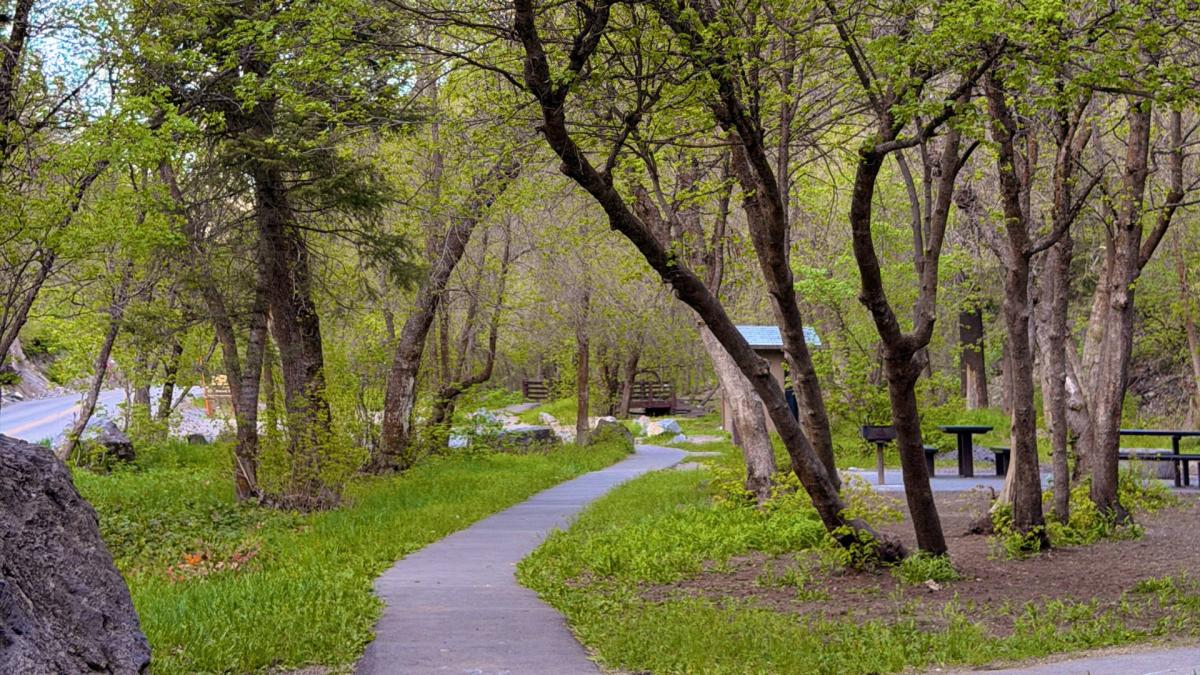
Best for: Lunch breaks, families with young kids, a scenic pause
A few miles up the canyon from Timpanogos Cave, the Roadhouse Picnic Area offers a peaceful spot to spread out a blanket and eat under the cottonwoods with the sound of American Fork Creek nearby. It's a well-maintained Forest Service site with tables, grills, and restrooms.
If you packed a lunch, this is the spot. The shade is generous, the crowd is light on weekdays, and the views up toward Timp's summit are hard to beat from a picnic table.
Stop 3: Tibble Fork Reservoir
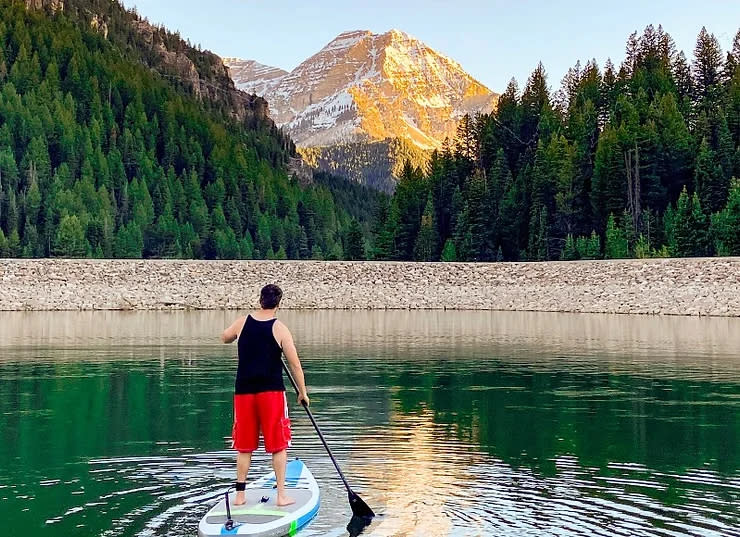
Best for: Fishing, paddling, a lakeside wander
Turn left off the main canyon road onto North Fork Road and follow it a couple of miles to Tibble Fork Reservoir — a small but satisfying alpine reservoir tucked into the mountains above 6,000 feet. The water is calm and glassy on still mornings, ringed by pines and aspens that go electric yellow and orange in September.
This is one of the easier fishing spots in the canyon, stocked regularly with trout. Non-anglers will enjoy the walking path around the reservoir's edge, and in warmer months, you might spot kayakers and paddleboarders drifting across the surface.
Plan for: 1–2 hours Pro tip: Go early on summer weekends — it fills up fast.
Stop 4: Silver Lake Flat Reservoir
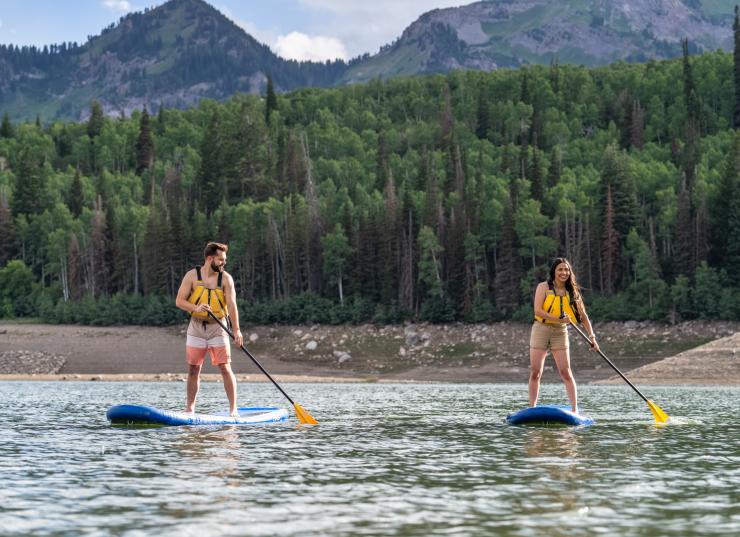
Best for: Solitude, wildflower hikes, stunning mountain reflections
Continue up North Fork Road past Tibble Fork and you'll arrive at Silver Lake Flat Reservoir, a quieter and higher-elevation alternative that many visitors overlook. Surrounded by open meadows and conifer forest, this reservoir offers some of the most photogenic reflections in the canyon — on windless days, the peaks of Timpanogos mirror perfectly in the water.
The area around Silver Lake Flat is excellent for wildflower spotting in July and early August, and several trail connections from here lead into the Uinta-Wasatch-Cache National Forest backcountry.
Plan for: 1–2 hours Pro tip: Mid-summer is the best time to visit for full water levels.
Stop 5: The Alpine Loop Scenic Byway
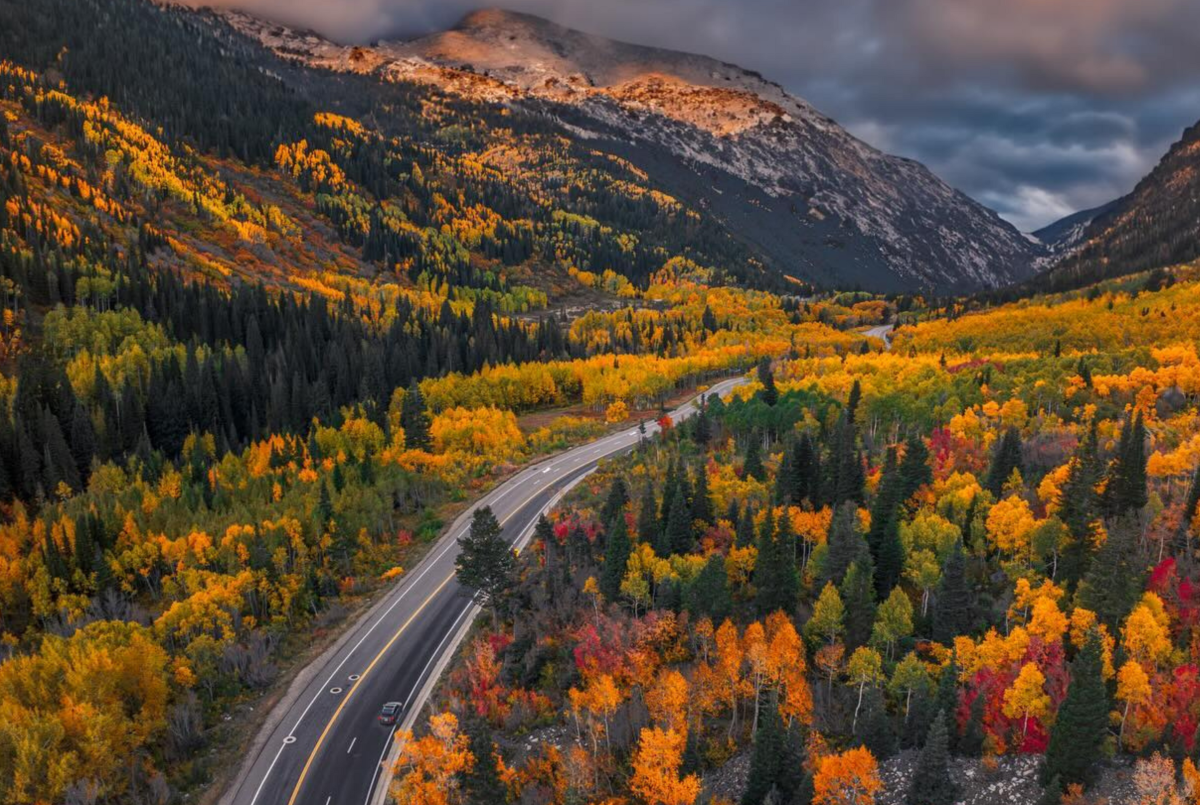
Best for: Scenic drives, cyclists, peak fall color
The crown jewel of American Fork Canyon is the Alpine Loop — a 20-mile scenic byway that crests over the top of the Wasatch Range at about 8,000 feet before descending into Provo Canyon on the other side. The road itself is the destination.
Highlights along the way include sweeping views of Mount Timpanogos, pull-offs with direct looks at Timp's glacially carved face, and access to trailheads including the famous Timpooneke and Aspen Grove trails — both leading to Timpanogos's 11,749-foot summit for those with an ambitious weekend in mind.
In late September and early October, the Alpine Loop becomes arguably the best fall foliage drive in Utah. Thousands of aspens erupt in gold and rust, and the contrast with the granite peaks above is staggering.
Plan for: 1.5–2.5 hours (drive only, more with stops) Pro tip: The Alpine Loop is typically open June through October, depending on snowfall. Check conditions with the Forest Service before heading up early or late in the season. The road is narrow and winding, take it slow and watch for cyclists.
Getting There & Entry Fees
American Fork Canyon is located off US-92 in American Fork, Utah — about 35 miles south of Salt Lake City and 10 miles north of Provo. The canyon entrance is on the east side of town.
A per-vehicle day-use fee is charged at the canyon entrance, or you can use an America the Beautiful Annual Pass, which is well worth the investment if you plan to visit multiple National Forest or Park Service sites this year. Timpanogos Cave charges a separate tour fee per person.
When to Visit
Spring (May–June): Waterfalls are at peak flow from snowmelt. Timpanogos Cave opens mid-May. Summer (July–August): Prime hiking season, wildflowers at Silver Lake Flat, warm swimming holes along the creek. Fall (September–October): The absolute best time for the Alpine Loop. Crowds are lighter on weekdays and the color is unmatched. Winter: The upper canyon and Alpine Loop close, but the lower canyon remains accessible for snowshoeing and ice climbing.
*American Fork Canyon is managed by the Uinta-Wasatch-Cache National Forest.
